Florida probate help
Probate.Help is the Florida probate site of attorney Rachel Schadt, Florida Bar No. 127500, in Sarasota. Rachel Schadt Law handles summary, formal and ancillary administration and works with clients statewide by video, phone and mail. Each page states the rule in plain English and links the statute that sets it.
- Attorney
- Rachel Brannan Schadt
- Florida Bar
- No. 127500, admitted April 18, 2017
- Office
- Sarasota, Florida
- Counties
- All 67, by video, phone and mail
- Hours
- Monday to Friday, 8 a.m. to 6 p.m.
Send the estate's facts
The form goes to attorney Rachel Schadt's office. A reply comes by phone or email.
Limits since July 1, 2026
Chapter 2026-57, Laws of Florida, raised four small-estate limits (Ch. 2026-57, Laws of Fla.). Older publications still show $75,000.
Which Florida probate path applies
Sorted from the smallest estate to the largest. Dollar limits are from the 2026 Florida Statutes.
| Path | Fits when | 2026 limit or rule | Source |
|---|---|---|---|
| Bank accounts paid to a family member | The funds are in depository accounts or certificates of deposit in the decedent's sole name with no pay-on-death or survivor designation. The claimant is the surviving spouse; if none, an adult child; then an adult descendant; then a parent. | $2,000 aggregate in qualified accounts. No court proceeding. Not earlier than 6 months after death. Affidavit and certified death certificate go to the financial institution. | § 735.303(1)-(3), Fla. Stat. (2026) |
| Federal income tax refund | The U.S. Treasury determines an overpayment of federal income tax for a taxpayer who has died. | $5,000 refund not above this amount may go to the surviving spouse on verified application. With no surviving spouse, it may go to a child designated by all of the decedent's children over age 14. No administration begun or planned. | § 735.302(1), Fla. Stat. (2026) |
| Disposition without administration | The decedent left only exempt personal property, personal property exempt from creditors under the Constitution, and nonexempt personal property not above preferred funeral expenses plus medical and hospital expenses of the last 60 days of the last illness. | No administration is required. An interested party applies informally by affidavit, letter or otherwise; the court may authorize payment or transfer by writing under its seal. The evidence of death is filed with the application (Fla. Prob. R. 5.205(a)(4)). | § 735.301(1)-(2), Fla. Stat. (2026) |
| Small intestate estate | The decedent died intestate leaving only exempt personal property and nonexempt personal property up to the limit. The decedent has been deceased more than 1 year and no administration is pending in Florida. | $20,000 nonexempt personal property, plus preferred funeral expenses and last-60-days medical expenses. An heir at law files an affidavit; formal notice goes to non-joining heirs, known creditors, and the Agency for Health Care Administration if the decedent was over 55. | § 735.304(1)-(2), Fla. Stat. (2026) |
| Summary administration | The estate subject to administration in Florida, less property exempt from creditors, does not exceed the limit, or the decedent has been dead for more than 2 years. In a testate estate, the will does not direct administration as required by chapter 733. | $150,000 A beneficiary, or the person nominated in the will as personal representative, files the petition. The surviving spouse, if any, and the beneficiaries sign and verify it, except a beneficiary who receives a full distributive share need not join. The court enters an order distributing the probate assets. | § 735.201, Fla. Stat. (2026); § 735.203(1); Fla. Prob. R. 5.530 |
| Formal administration | The estate does not qualify for a smaller path, or the will directs administration. | No dollar limit. The court appoints a personal representative, who publishes a notice to creditors once a week for 2 consecutive weeks (§ 733.2121(2)) and files an inventory within 60 days after letters (Fla. Prob. R. 5.340(a)). | Ch. 733, Fla. Stat. (2026); § 733.202 |
| Ancillary administration | A nonresident of Florida dies leaving assets in Florida, credits due from Florida residents, or liens on Florida property. | Ancillary letters go to the personal representative named in the will for the Florida property, or to the foreign personal representative, if qualified to act in Florida. Notice to creditors follows chapter 733. | § 734.102(1)-(5), Fla. Stat. (2026) |
| Trust administration | Assets are titled in a trust. A formerly revocable trust may become irrevocable by the settlor's death. | The trustee gives notice to qualified beneficiaries within 60 days after learning that a formerly revocable trust has become irrevocable (§ 736.0813(1)(b)). A revocable trust is liable for estate expenses and obligations to the extent the estate is insufficient (§ 733.707(3)). | Ch. 736, Fla. Stat. (2026); § 736.0602(1) |
| Homestead | The decedent owned a homestead: up to 160 contiguous acres outside a municipality, or one-half acre within one. | The homestead exemption from forced sale inures to the surviving spouse or heirs. The homestead is not subject to devise if the owner is survived by a spouse or minor child, except it may be devised to the spouse if there is no minor child. | Art. X, § 4(a)-(c), Fla. Const. |
Start from the situation
No will (intestate)
Sections 732.101 to 732.111 set who inherits when there is no will
Out-of-state executor
Who can serve as personal representative of a Florida estate while living outside Florida, and what the court requires.
Real estate in the estate
How title to a Florida home, condo or land passes at death, and how protected homestead differs from other real property.
Small estate / no real property
Summary administration up to $150,000; two smaller routes for personal property only
Disputed will or heir
Will contests, undue influence claims and heirship disputes: grounds, deadlines and procedure
Not sure probate is needed
Which assets pass without a court case, in one decision table.
First steps after a death
In order. The first 72 hours, in full
Find the will
The person holding the original will must deposit it with the clerk of the court within 10 days after learning of the death (§ 732.901(1), Fla. Stat. (2026)). The clerk keeps a deposited will at least 20 years (§ 732.901(4)).
Order certified death certificates
The Florida Department of Health lists a $15 fee for the first certificate, which includes a $5 search fee and a $10 rush fee, and $4 for each additional one. VitalChek, the department's online vendor, adds a $7 processing fee (Fla. Dep't of Health, Death Certificates). The bank affidavit under § 735.303(3) requires a certified copy, and the court receives an official record of death (Fla. Prob. R. 5.205).
Report the death to Social Security
Funeral homes generally report the death. If none did, call 1-800-772-1213 with the name, Social Security number, date of birth and date of death (SSA, What to do when someone dies).
Creditor claims follow a statutory order
Creditors file claims in the probate case, by the later of 3 months after first publication of the notice to creditors or 30 days after service on the creditor (§ 733.702(1)). The personal representative pays in the class order of § 733.707(1); funeral and burial expenses are Class 2, up to $6,000.
Identify the probate path
Some small estates need no administration. Limits run from $2,000 for bank accounts to $150,000 for summary administration (§ 735.303, § 735.201).
Florida probate deadlines
Each period with the event that starts it. Full timeline
| Deadline | Period | Starts when | Source |
|---|---|---|---|
| Deposit the will | 10 days | The custodian receives information that the testator is dead | § 732.901(1) |
| File an official record of death (formal administration) | 3 months not later than | First publication of the notice to creditors | Fla. Prob. R. 5.205(a)(1) |
| Serve the Agency for Health Care Administration | 3 months | First publication of the notice to creditors, when the decedent was 55 or older | § 733.2121(3)(d) |
| File a creditor's claim | 3 months or 30 days after service on a creditor required to be served, whichever is later | First publication of the notice to creditors | § 733.702(1) |
| Object to the will's validity, venue or jurisdiction | 3 months extended only for estoppel based on a misstatement by the personal representative; in any case no later than the earlier of final discharge or 1 year after service | Service of the notice of administration on the interested person | § 733.212(2)(c), (3) |
| Petition to determine exempt property | 4 months or 40 days after a will or other proceeding ends, whichever is later | Service of the notice of administration | § 733.212(2)(d) |
| Elective share election | 6 months or 2 years after death, whichever is earlier, unless extended | Service of the notice of administration on the surviving spouse | § 733.212(2)(e) |
| File the inventory | 60 days | Issuance of letters | Fla. Prob. R. 5.340(a) |
| File the final accounting and petition for discharge | 12 months extendable by the court for cause | Issuance of letters, for an estate not filing a federal estate tax return | Fla. Prob. R. 5.400(c) |
| Object to the accounting or petition for discharge | 30 days | Service of the last of the petition for discharge or final accounting | Fla. Prob. R. 5.400(b)(6) |
| Claims against the estate are cut off | 2 years | The date of death, whether or not letters have issued, except as § 733.710 provides | § 733.710(1) |
| Trustee notice to qualified beneficiaries | 60 days | The trustee learns that a formerly revocable trust has become irrevocable | § 736.0813(1)(b) |
Probate court guide, by county
A probate case is filed in the county where the person was domiciled (§ 733.101(1)(a), Fla. Stat. (2026)). Each county guide lists the clerk, the posted filing fees, the probate judges and the local rules.
Choose a county on the map or in the list.
Florida probate guides
All guides- Do I need probate in Florida? Which assets and estates skip it
- Florida probate costs in 2026: attorney fees, commissions and court fees
- Florida probate timeline 2026: deadlines and steps from death to discharge
- What to do in the first 72 hours after a death in Florida
- Florida intestate succession: who inherits when there is no will, the spouse's share, descendants, parents, siblings and other relatives, the homestead, who is not an heir and steps to settle the estate
- Florida personal representative duties: who can serve, a phased checklist from appointment to discharge, creditor and tax deadlines, compensation, liability, resignation and removal
- Selling an inherited Florida home: who can sign, probate steps, mortgage and taxes
- Ancillary probate in Florida: when it is needed, who can serve, steps and alternatives
Probate tools
Eligibility Quiz
Four short questions. See which probate path likely applies and how long it takes.
2 minutes. No signup.
Attorney Fee Calculator
Set the compensable value of the estate. See the attorney fee that § 733.6171(3), Fla. Stat. (2026), presumes reasonable for ordinary services in a formal administration.
30 seconds. No signup.
Heir Visualizer
Pick the family situation. The chart shows how the Florida intestacy statutes divide the estate.
1 minute. No signup.
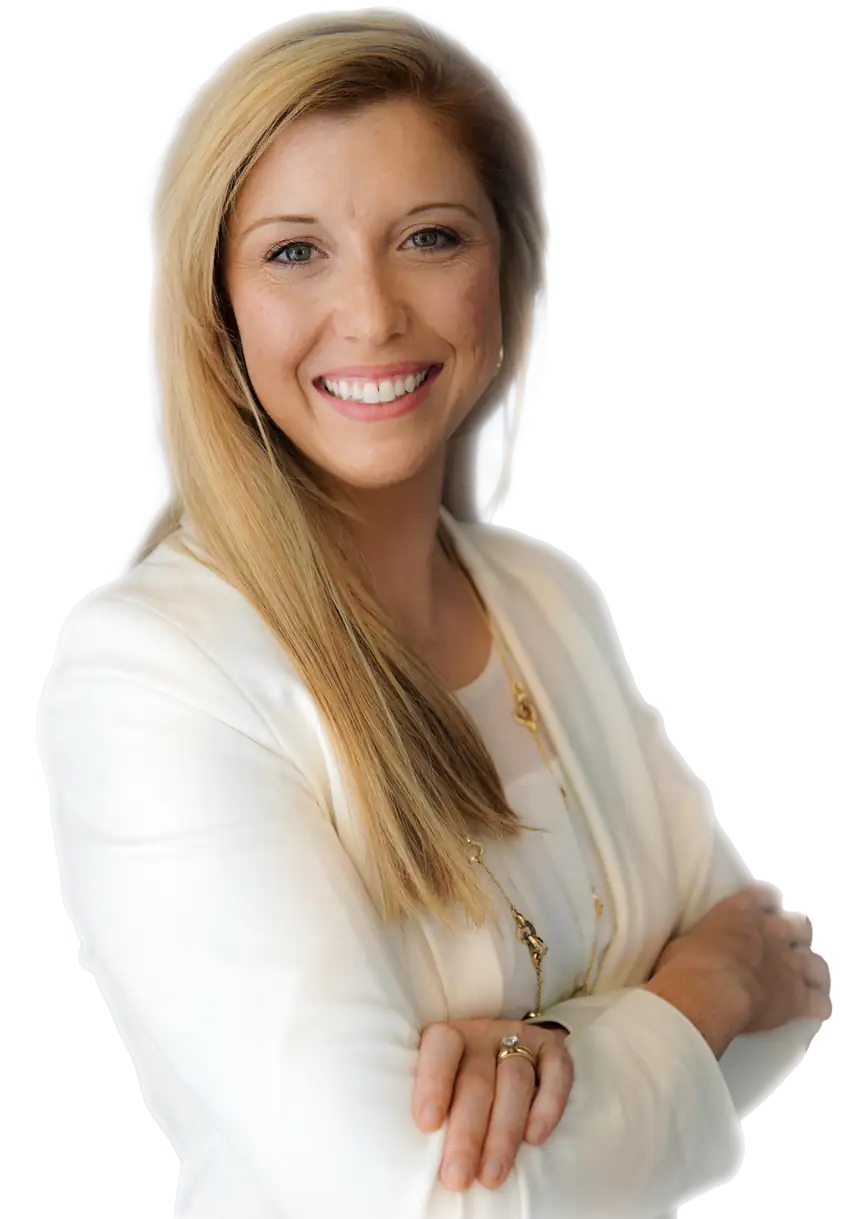
Attorney Rachel Schadt
Rachel Brannan Schadt is a Florida attorney in Sarasota. Her practice is probate, trust administration and wills.
- Florida Bar number
- 127500
- Admitted
- April 18, 2017
- Bar section
- Real Property, Probate and Trust Law
- Federal courts
- Middle, Northern and Southern Districts of Florida
- Law school
- Western Michigan University Cooley Law School
“Rachel was great at taking care of our estate planning. She patiently explained in detail and worked with us to fit our schedule. I learned so much and got a peace of mind.”
“Rachel was absolutely the best! She was very professional and very compassionate with our case. She was very reliable and always returned our phone calls or emails promptly. She explained everything to us step by step. She went above and beyond helping us. We would definitely recommend Rachel and will use her again in the future for our legal needs.”
“I chose this attorney based on reviews in a neighborhood website. I needed her services to make sure my father's will from another state, would be valid here in Florida. The attorney clarified what legal issues could be encountered and explained in simple laymen's terms, why an updated will would be necessary. I also am having her review our trust and am working on updating that as well. I highly recommend this legal group. The attorney was very knowledgeable about elder law and ethics.”
Client reviews copied unedited from Rachel Schadt's Lawyers.com profile. Results in one matter do not predict results in another.
Florida probate questions
What is the 10-day rule for probate in Florida?
The custodian of a will must deposit it with the clerk of the court having venue within 10 days after receiving information that the testator is dead, and must give the clerk the date of death or the last four digits of the testator's Social Security number (§ 732.901(1), Fla. Stat. (2026)). A court can compel a custodian to produce the will and can assess costs, damages and a reasonable attorney's fee against a custodian who had no just or reasonable cause for failing to deposit it (§ 732.901(2)).
What is the probate threshold in Florida for 2026?
Summary administration is available when the entire estate subject to administration in Florida, less property exempt from creditors, does not exceed $150,000, or the decedent has been dead for more than 2 years (§ 735.201(2), Fla. Stat. (2026)). Chapter 2026-57 changed the figure from $75,000, effective July 1, 2026 (Ch. 2026-57, §§ 7, 14, Laws of Fla.). Smaller paths have their own limits of $2,000, $5,000 and $20,000, listed in the paths table above.
What changed in Florida probate in 2026?
Chapter 2026-57 raised four small-estate limits (§ 735.201, § 735.302, § 735.303, § 735.304), added § 733.6125 on costs and attorney fees when a personal representative enforces authority, and revised the safe-deposit box rules in § 655.933 and § 655.936. The provisions are in the [table of changes](#changes-2026) above.
What court handles probate in Florida?
Circuit courts have exclusive original jurisdiction of proceedings relating to the settlement of the estates of decedents (§ 26.012(2)(b), Fla. Stat. (2026)). The case is filed with the clerk in the county where the decedent was domiciled (§ 733.101(1)(a)). Sarasota, Manatee and DeSoto Counties are the 12th Judicial Circuit (§ 26.021(12)).
How much does probate cost in Florida?
Clerk filing fees are capped by statute: $230 to open an estate, $340 for summary administration of an estate of $1,000 or more, and $395 for formal administration, plus a $4 service charge on summary and formal administration petitions (§ 28.2401(1), (3), Fla. Stat. (2026)). Attorney compensation is not set by a mandatory fee: an attorney who charges by the schedule in subsection (3) must disclose in writing that there is no mandatory statutory attorney fee and that the fee is subject to negotiation (§ 733.6171(2)(b)1.-3.).
Who can be a personal representative in Florida?
A person who is sui juris and a Florida resident at the time of the death (§ 733.302, Fla. Stat. (2026)). A nonresident qualifies only as a legally adopted child or adoptive parent, a lineal relative, a spouse, sibling, uncle, aunt, nephew or niece, or someone related by lineal consanguinity to one of them, or the spouse of a qualified person (§ 733.304).
Can a bank release a deceased person's account without probate?
In one case. A financial institution in Florida may pay a family member the funds in all qualified accounts, without a court proceeding, when the combined funds do not exceed $2,000 and at least 6 months have passed since the death. The family member gives the institution a certified death certificate and a sworn affidavit (§ 735.303(2)-(3), Fla. Stat. (2026)).
Does Florida have an estate or inheritance tax?
No. A federal change eliminated Florida's estate tax for people who died after December 31, 2004 (Fla. Dep't of Revenue, Florida Estate Tax). A federal estate tax return is required only when the gross estate plus adjusted taxable gifts and specific gift tax exemption exceeds the filing threshold for the year of death, $15,000,000 for 2026 (IRS, Estate tax).
Can a Florida homestead be left by will?
The homestead is not subject to devise if the owner is survived by a spouse or minor child. The exception: it may be devised to the owner's spouse if there is no minor child (Art. X, § 4(c), Fla. Const.).
Statute links go to the 2026 Florida Statutes at flsenate.gov. Probate Rules links go to The Florida Bar. Sources last checked October 16, 2026.